9 Integrating VNS into Daily Life
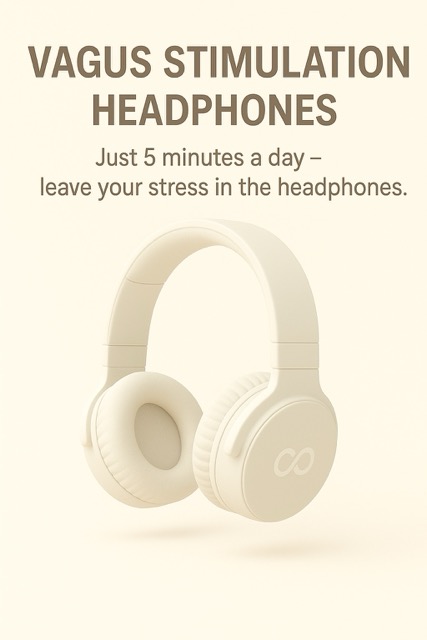
As we’ve explored in previous chapters, vagus nerve stimulation (VNS) offers promising benefits for stress management, cognitive enhancement, and sleep improvement. While the neurophysiological mechanisms and clinical applications have been well-established, the practical integration of VNS technology into everyday routines represents a crucial frontier for widespread adoption. This chapter bridges the gap between laboratory findings and real-world implementation, providing a framework for incorporating VNS into daily activities for optimal wellness.
9.1 The Shift from Clinical to Consumer Applications
The evolution of VNS technology from medical intervention to wellness tool, as described in Chapter 3, has created new opportunities for everyday applications. What was once confined to surgical implants for epilepsy and depression treatment now includes non-invasive, user-friendly devices designed for daily use. This democratization of neural stimulation technology allows individuals to access its benefits in various contexts:
- Home environments: Personal devices permit regular stimulation sessions without clinical supervision
- Workplace settings: Brief interventions throughout the workday to manage stress and maintain focus
- Travel scenarios: Portable solutions for mitigating travel-related stressors and sleep disruption
- Exercise and recovery: Integration with physical activity routines for enhanced performance and recuperation
The key to effective integration is understanding not just when and how to use VNS, but how to seamlessly incorporate it into existing routines without adding burden or complexity.
9.2 Physiological Readiness Assessment: Knowing When to Stimulate
Before discussing specific applications, it’s important to establish how individuals can recognize when VNS intervention might be beneficial. Since optimal VNS effects depend on current physiological state, users should learn to identify their autonomic balance through various accessible indicators:
9.2.1 Self-Assessment Techniques
Heart rate variability awareness: Recent research shows that heart rate variability (HRV) can serve as a reliable physiological indicator of autonomic tone during taVNS sessions1. Studies comparing active cymba conchae stimulation with sham stimulation found significant increases in vagally mediated HRV parameters in both time and frequency domains. This suggests users can potentially monitor their HRV via consumer wearables to identify optimal times for intervention.
Respiratory pattern observation: Breathing rate and depth provide immediate feedback on autonomic state. The relationship between respiration and VNS efficacy is bidirectional—deep breathing exercises can enhance VNS effects, while VNS can improve respiratory regulation.
Subjective stress scoring: Simple self-rating of perceived stress on a 1-10 scale can help users decide when intervention would be most beneficial. This phenomenological approach, while subjective, correlates reasonably well with physiological stress markers.
Physical tension inventory: Brief body scans to identify muscle tension, particularly in the neck, shoulders, and jaw, can indicate sympathetic dominance that might benefit from vagal stimulation.
Recent comparative studies by Ertürk and Özden (2025) demonstrated that both transcutaneous auricular VNS and deep breathing exercises produced significant decreases in perceived stress scale scores, pulse rates, and blood pressure values after just a single session2. This supports the value of these simple physiological measures as feedback mechanisms for timing VNS application.
9.3 Daily Life Applications and Use Cases
Building on these assessment techniques, we can now explore specific applications within the rhythms of daily life. The following scenarios are supported by emerging research and user experience data from consumer VNS implementations.
9.3.1 Morning Routines: Starting the Day with Neural Balance
The transition from sleep to wakefulness represents a critical period for establishing autonomic tone for the day ahead. Research indicates that morning HRV patterns can predict daily stress resilience and cognitive performance.
Practical Application: Wake-Up Regulation
- Timing: 5-10 minutes immediately after waking
- Device placement: Ear-based stimulation (cymba conchae) using comfortable, wearable electrodes
- Protocol: Begin with 3 minutes of low-frequency stimulation (3-5 Hz) to gently activate the parasympathetic system, followed by 5 minutes of moderate frequency (15-25 Hz) to promote alertness
- Integration tips: Combine with morning hydration routine; use while reviewing daily agenda
This morning protocol helps transition from the parasympathetic dominance of sleep to balanced sympathetic activation for daytime activities without the harsh cortisol spike associated with abrupt awakening or alarm stress.
9.3.2 Workplace Integration: Cognitive Enhancement and Stress Management
Given the cognitive demands of modern work environments, strategic VNS application can support both performance and wellbeing throughout the workday.
Practical Application: Focus Enhancement
- Timing: Before high-concentration tasks or during attention slumps (typically mid-morning and mid-afternoon)
- Device option: Neck-based or ear-based stimulation with discrete form factor
- Protocol: 3-5 minutes of higher frequency stimulation (20-25 Hz) to activate the locus coeruleus-norepinephrine system that supports attention
- Integration tips: Pair with brief work breaks; schedule before important meetings or complex tasks
Practical Application: Stress Recovery
- Timing: After stressful interactions, challenging meetings, or intense cognitive work
- Device option: Ear-based stimulation with comfortable earbuds
- Protocol: 5-7 minutes of low-frequency stimulation (5-10 Hz) to prompt parasympathetic recovery
- Integration tips: Combine with brief nature exposure if possible; use during transition periods between tasks
Studies comparing taVNS with deep breathing exercises have shown these interventions can significantly alter autonomic measurements in favor of parasympathetic activation3. Furthermore, measurements of physical tension using myotonometry demonstrate decreased muscle stiffness and increased relaxation following even brief stimulation sessions—effects that are particularly valuable in workplace settings characterized by prolonged sitting and stress-induced muscle tension.
9.3.3 Commuting and Travel: Managing Transition Stress
Travel contexts present unique stressors including noise, crowding, time pressure, and disrupted routines. VNS can provide stability during these transitions.
Practical Application: Commute Decompression
- Timing: During commute or immediately upon arriving home
- Device option: Comfortable, portable ear-based stimulator
- Protocol: 10-15 minutes of alternating frequencies (cycling between low and moderate) to facilitate the transition between work and home mindsets
- Integration tips: Combine with noise-cancelling functionality when in transit; pair with arrival rituals when reaching home
For business travelers, regular VNS sessions can help mitigate the autonomic disruption associated with jet lag and schedule changes. Brief stimulation periods upon wake-up in a new time zone can accelerate circadian adjustment.
9.3.4 Physical Activity Enhancement: Pre and Post-Exercise Applications
Exercise represents a planned stress on the autonomic system, and VNS can optimize both performance and recovery phases.
Practical Application: Pre-Workout Priming
- Timing: 5-10 minutes before beginning exercise
- Device option: Ear-based or neck-based stimulation with secure fit for movement
- Protocol: Gradual increase from low to moderate frequency (5-15 Hz) to prepare the autonomic system for controlled stress
- Integration tips: Incorporate during warm-up routines; combine with performance visualization
Practical Application: Recovery Acceleration
- Timing: Immediately post-exercise and/or before sleep on training days
- Device option: Comfortable, stationary setup for longer sessions
- Protocol: 15-20 minutes of primarily low frequency (3-8 Hz) stimulation to enhance parasympathetic recovery
- Integration tips: Combine with static stretching or leisure reading; use during cool-down phases
Research demonstrates that alternating between deep breathing exercises and transcutaneous VNS provides complementary benefits. In studies with both healthy participants and those with conditions like rheumatoid arthritis, the combination shows enhanced vagal tone as measured through time-domain HRV parameters[^3]. This suggests that integrating both modalities into physical training regimens may offer superior results compared to either approach alone.
9.3.5 Sleep Preparation: Transitioning to Restorative Rest
As discussed in Chapter 6, the relationship between VNS and sleep quality is well-established. Practical implementation focuses on the critical pre-sleep period.
Practical Application: Sleep Onset Facilitation
- Timing: 20-30 minutes before desired sleep time
- Device option: Comfortable ear-based stimulation with minimal light emission
- Protocol: 15-20 minutes of low frequency (2-5 Hz) stimulation with gradually decreasing intensity
- Integration tips: Incorporate into existing bedtime routine; pair with reduced lighting and screen avoidance
For individuals with sleep onset difficulties, this application may reduce the need for pharmacological interventions. The mechanism appears to operate through both direct autonomic effects and indirect benefits from reduced pre-sleep rumination and anxiety.
9.4 Personal Customization: Building Your VNS Protocol
While the applications above provide starting points, effective integration requires personalization based on individual response patterns, lifestyle demands, and physiological baselines.
9.4.1 Tracking and Adjustment Framework
Establish baseline measures: Before beginning regular VNS use, document typical patterns of stress, focus, sleep quality, and recovery using both subjective ratings and available biometric data.
Start with standard protocols: Begin with established parameters for your primary goals (stress reduction, focus enhancement, sleep improvement).
Document response patterns: Keep a simple log of:
- Pre-stimulation state
- Protocol used (location, frequency, duration)
- Immediate post-stimulation effects
- Delayed effects (hours later)
Iterative refinement: After 7-10 days, review patterns to identify:
- Most effective protocols for each goal
- Optimal timing throughout the day
- Minimum effective stimulation duration
- Individual sensitivities or side effects
Contextual adaptation: Adjust protocols based on seasonal changes, work demands, or health fluctuations.
This personalized approach acknowledges the significant individual variation in VNS response. Research comparing cymba conchae stimulation with sham stimulation found that while group-level HRV increases were significant, considerable individual variation exists in magnitude of response4. This highlights the importance of personalized tracking rather than reliance on population averages.
9.5 Multi-Modal Integration: Combining VNS with Complementary Practices
The effectiveness of VNS can be enhanced when integrated with other evidence-based wellness practices that target similar physiological systems.
9.5.1 Synergistic Combinations
VNS + Breathing Practices: Research comparing deep breathing exercises and transcutaneous VNS found that both interventions increase parasympathetic activity and promote muscle relaxation(Ertürk and Özden 2025)(Jensen et al. 2022). The combination appears particularly effective, with deep breathing showing superior effects on parasympathetic metrics like RMSSD and pNN50, while VNS demonstrated advantages in muscle relaxation measurements.
VNS + Temperature Contrast: Brief cold exposure (cold showers, facial immersion) activates similar vagal pathways. Alternating moderate cold exposure with VNS may potentiate effects.
VNS + Music/Sound Therapy: Acoustic stimulation with specific frequency profiles can enhance VNS effects on both relaxation and attention. Several consumer devices now offer synchronized sound and electrical stimulation.
VNS + Light Exposure Management: Coordinating VNS sessions with strategic light exposure (bright morning light, reduced blue light before sleep) can reinforce circadian regulation.
VNS + Mindfulness Practices: Combining taVNS with mindfulness meditation may create bidirectional enhancement—VNS facilitates the physiological state conducive to meditation, while meditation practice increases sensitivity to vagal effects.
9.6 Technology Solutions: Current and Emerging Options
A diverse ecosystem of VNS devices has emerged to support these applications, each with advantages for specific use cases. As discussed in Chapter 7, the hardware landscape continues to evolve, with several categories now available:
9.6.1 Key Implementation Considerations
When selecting technology for daily applications, consider:
- Form factor appropriateness: Will the device fit comfortably into the intended use context?
- User control granularity: Does the system provide adequate parameter adjustment?
- Feedback mechanisms: How will you know the stimulation is effective?
- Battery life and charging: Will it support your intended usage pattern?
- Data integration: Can stimulation sessions be correlated with other health metrics?
Particularly promising are emerging systems that adapt stimulation parameters based on real-time physiological monitoring, creating “closed-loop” regulation that responds to changing conditions throughout the day.
9.7 Potential Challenges and Solutions
While integrating VNS into daily routines offers significant benefits, several common challenges may arise:
9.7.1 Adherence and Consistency
Challenge: Like many health practices, consistent application can be difficult to maintain. Solution: Start with minimal effective protocols; link VNS sessions to existing daily anchors (morning coffee, commute, bedtime routine); use technology with reminders and tracking.
9.7.3 Overstimulation Risk
Challenge: Enthusiasm for benefits may lead to overuse, potentially reducing effectiveness. Solution: Follow evidence-based protocols; include “rest days” or reduced stimulation periods; monitor for diminishing returns.
9.7.4 Sensory Adjustment
Challenge: The physical sensation of stimulation may initially be distracting. Solution: Begin with lower intensity settings and gradually increase; experiment with electrode positioning; pair stimulation with pleasant activities to create positive associations.
9.8 Conclusion: Toward Seamless Integration
As VNS technology continues to develop, the goal is increasingly seamless integration into daily life—where neural stimulation becomes as commonplace as other health and performance practices. The most successful implementation approaches share certain characteristics:
- They align with natural daily rhythms and transitions
- They complement rather than compete with existing routines
- They provide noticeable benefits that reinforce continued use
- They adapt to changing needs and contexts
By thoughtfully applying the principles and practices outlined in this chapter, VNS can move beyond occasional intervention to become an integral component of daily wellness—providing ongoing support for autonomic balance, cognitive function, and stress resilience in our increasingly demanding world.
The next chapter will explore emerging developments in VNS technology, including closed-loop systems and AI-enhanced protocols that promise even more precise and personalized applications in the near future.
9.7.2 Social Acceptance
Challenge: Using visible neurostimulation devices may draw unwanted attention or questions. Solution: Select discrete form factors for public settings; educate close contacts about the purpose and benefits; frame as similar to other wellness technologies.